If there is one clothing item that has caused more quiet frustration than any other, it is jeans. Not shoes. Not dresses. Jeans.
They look innocent enough when folded on a shelf or hanging neatly in a store. Denim promises effortlessness. Throw it on, step out, live your life. But for many plus-size women, that promise has often felt like a lie told too many times. Too tight at the waist, loose at the back. Fits the hips but refuses to move past the thighs. Comfortable when standing, hostile the moment you sit. And the worst part is not even the poor fit. It is the silent suggestion that your body is the problem.
It isn’t.
The real issue is that for decades, denim was designed around a narrow understanding of shape and proportion. Curves were treated like an afterthought. Plus-size women were expected to adjust themselves to the clothes, instead of clothes being designed to meet them halfway.
Thankfully, things are changing. Slowly, imperfectly, but noticeably. There are now jeans that understand curves. Jeans that stretch where they should, hold where they must, and move when life happens. The challenge today is not whether good plus-size jeans exist. It is knowing how to recognise them.
This conversation is about that. Not trends, not rules, nust honest guidance, drawn from experience, observation, and a clear understanding that style should feel like freedom, not punishment.
Why Finding the Right Jeans Feels Harder Than It Should
Jeans are deceptively complex. They are meant to hug, support, and shape the body, all while being strong enough to survive daily wear. When that design is done without real bodies in mind, problems multiply quickly.
Plus-size bodies are not simply scaled-up versions of straight-size bodies. Weight distribution varies. Some women carry weight in their hips. Others in their stomach. Some have fuller thighs with a smaller waist. Others have straighter proportions with curves concentrated elsewhere. When brands ignore these realities, the result is predictable: jeans that technically fit, but never feel right.
That is why two women with the same dress size can have completely different experiences with the same pair of jeans. Fit is personal. And choosing the right jeans starts with understanding your own shape, not forcing yourself into someone else’s idea of how denim should sit.
The Quiet Power of a Well-Fitting Pair of Jeans
A good pair of jeans does something subtle but important. It removes distraction. You stop tugging at the waistband. You stop adjusting when you sit. You stop wondering how you look from the side. Your attention shifts outward, where it belongs.
This is especially important in countries where jeans are not just casual wear but social currency. They appear in workplaces with relaxed dress codes, in creative industries, on flights, at casual meetings, and in everyday life. Jeans are everywhere. Feeling uncomfortable in them can quietly affect confidence.
Understanding Jean Styles Without Overthinking It
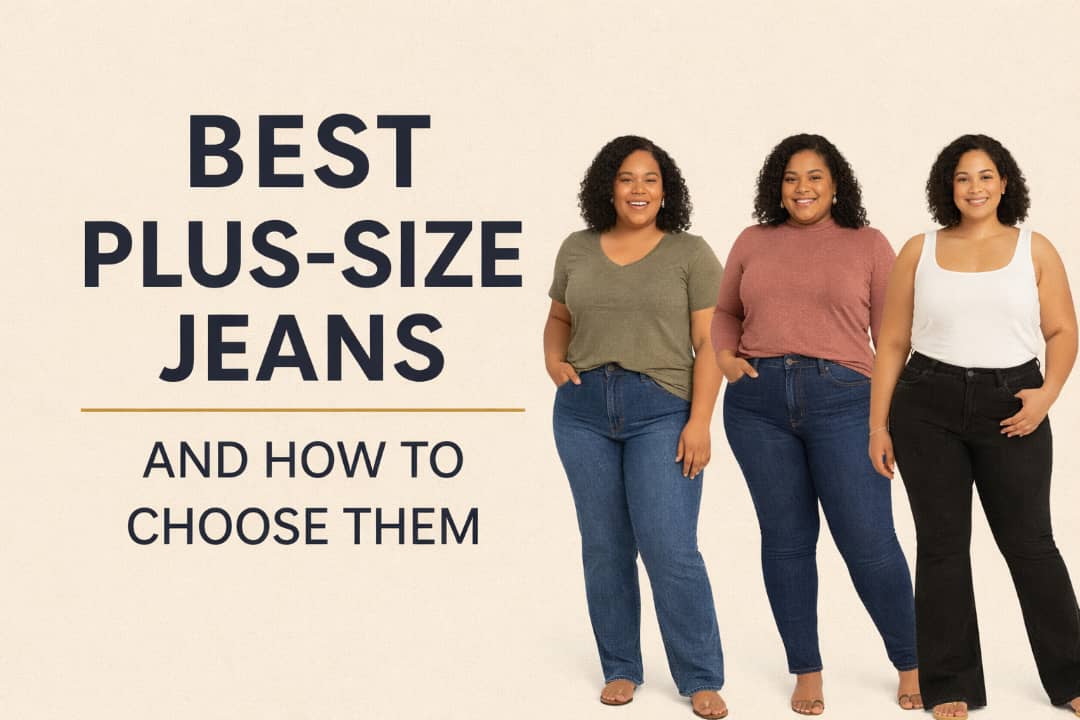
You do not need to memorise fashion terminology to find good jeans. What you need is clarity. High-waisted jeans, for instance, are popular not because they are trendy, but because they follow the natural waistline. They offer support without squeezing and tend to smooth the midsection rather than fight it. For many plus-size women, this alone makes a noticeable difference.
Straight-leg jeans work because they do not exaggerate any single part of the body. They create balance. The line from hip to hem is clean and predictable, which makes them easy to style and comfortable to wear.
Bootcut and flared jeans often get overlooked, but they quietly solve a problem many curvy women experience. By widening slightly at the hem, they balance fuller hips and thighs. The result is proportion, not camouflage.
Wide-leg jeans are more expressive. When done right, they look intentional and confident. When done wrong, they can feel overwhelming. Structure is everything here. A defined waist and quality fabric separate stylish from sloppy.
Skinny jeans still have a place, despite what trend cycles say. For some women, they feel secure and familiar. The key is stretch and recovery. If a skinny jean does not bounce back after movement, it will become uncomfortable quickly.
Fabric: The Difference Between Comfort and Regret
Denim fabric matters more than most people realise. A good plus-size jean almost always includes a small amount of stretch. This allows the fabric to move with the body instead of resisting it. But stretch must be balanced. Too much elasticity leads to sagging, especially around the knees and seat.
Weight matters too. Heavier denim offers structure and longevity. Lighter denim feels soft but may wear out faster in areas that experience friction. Neither is wrong. They simply serve different purposes. If possible, test jeans at the end of the day, not the beginning. Bodies change as the day progresses. A pair that feels forgiving in the evening is likely to serve you better in real life.
The Small Details That Make a Big Difference
When jeans are designed with intention, the details show. Back pockets are positioned to lift rather than flatten. Seams sit smoothly without digging in. Waistbands stay in place without constant adjustment. These things are not accidents. They are design decisions.
Length is another quiet factor. Jeans that hit at the ankle tend to look polished across different body types. Cropped styles can work, but only when the cut is deliberate. An awkward length can disrupt an otherwise good outfit.
None of these details scream for attention, but together, they decide whether a pair of jeans becomes a favourite or stays at the back of the wardrobe.
Shopping Smarter, Not Harder
Price does not guarantee fit. Some affordable brands have invested heavily in understanding plus-size bodies. Some expensive brands still miss the mark.
Reading reviews helps, but learning to read between the lines helps more. Look for comments about waistband fit, stretch retention, and comfort after several hours of wear. Those insights matter more than polished marketing language. If you can, order two sizes and compare them at home. Lighting, mirrors, and time pressure in stores often distort judgment. Your home tells the truth.
And when you find a pair that works, it is not foolish to buy another in a different wash. Denim success is rare enough to be respected.
Styling Jeans for Real Life
The beauty of good jeans lies in their adaptability. They work with sneakers and T-shirts on quiet days. With blazers and structured tops for casual professional settings. With heels and statement pieces for evenings out. They do not demand attention. They support it. That versatility is especially valuable in fast-paced environments common in Tier-1 countries, where one outfit often needs to move across multiple settings in a single day.
The Emotional Side of Denim
Clothing carries memory. Many plus-size women have had moments in fitting rooms that linger longer than they should. Frustration. Self-blame. Quiet disappointment.
Finding jeans that fit well can feel like closure. Not because jeans define worth, but because they remove a source of unnecessary tension. When clothes stop arguing with your body, you move differently. You take up space more comfortably. You exist without apology.
A Final Thought
The best plus-size jeans are not about hiding curves or forcing them into submission. They are about cooperation. When denim understands your body, everything becomes easier. Getting dressed becomes simpler. Going out feels lighter. Standing in front of the mirror feels less like negotiation and more like recognition.
Good jeans do not change who you are. They simply stop getting in the way. And that, in the end, is what good style should always do.
Leave a Reply